


agosto 5, 2026
Immigration Evaluations of Texas
If you’re considering a VAWA immigration evaluation, you probably have questions about what actually happens during the process. That uncertainty is completely normal. A VAWA evaluation is a specialized immigration psychological evaluation that documents the emotional and psychological effects of abuse you’ve experienced at the hands of a U.S. citizen or lawful permanent resident spouse, parent, or adult child. The evaluation supports your VAWA self-petition by providing clinical evidence for your case.
This process is different from regular therapy. It is a forensic-style assessment conducted to support immigration relief, not an ongoing treatment relationship – though it may recommend therapy afterward. VAWA allows self-petitioning for immigration relief, and it applies to survivors of abuse regardless of gender or age.
Immigration Evaluations of Texas is a Texas-based practice specializing in immigration evaluations, including VAWA, extreme hardship waivers, U visa, T visa, asylum, cancellation of removal, Adam Walsh, and SIJS cases, with both telehealth and in-person options. Immigration psychological evaluations assess mental health for immigration purposes, and research suggests forensic evaluations improve VAWA grant rates to 81.6%, compared to roughly 42.4% for cases submitted without clinical documentation.
You do not have to relive everything in one sitting. The process is paced, trauma-informed, and built around your safety.
Quick answer: After scheduling, you’ll complete intake paperwork and participate in one to three in-depth interviews covering your abuse history and its impact on your life. The evaluator may use standardized questionnaires to measure trauma related symptoms like PTSD, depression, and anxiety. You’ll then receive a detailed forensic report – typically within about five business days – designed specifically for your immigration attorney and USCIS.

What Is a VAWA Immigration Evaluation?
A VAWA immigration evaluation is a type of immigration psychological evaluation focused on documenting battery or extreme cruelty – including coercive control – for a VAWA self-petition under the Violence Against Women Act (commonly referred to as the women act). VAWA applications require Form I-360 submission, and the evaluation aims to establish extreme cruelty or battery for immigration purposes by connecting your psychological symptoms to the abuse you experienced.
This is a forensic psychological service grounded in clinical psychology but tailored to the legal standards used by USCIS and immigration court. Unlike general mental health evaluations, immigration mental health evaluations are more structured and oriented toward specific referral questions your immigration attorney needs answered.
Similar forensic psychological evaluations are used across many immigration cases: hardship waivers (I-601/I-601A), U visa, T visa, asylum, SIJS, cancellation of removal, and removal of conditions, among others. The approach shares common elements across these case types, but a VAWA evaluation focuses specifically on the dynamics of domestic violence.
A typical VAWA psychological evaluation report includes background information, trauma history, current mental health symptoms, diagnostic impressions when appropriate, and professional opinions linking abuse to psychological impact. The evaluation process typically includes a detailed report that links abuse to your mental health status. A psychological evaluation is one piece of evidence considered by USCIS for VAWA cases, and VAWA evaluations document the impact of domestic violence for immigration relief.
Immigration Evaluations of Texas provides 12–20 page, attorney-ready forensic reports that are culturally sensitive and trauma-informed.
Who Should Consider a VAWA Evaluation?
You may benefit from a VAWA evaluation if you are a spouse, former spouse, child, or parent of a U.S. citizen or lawful permanent resident and have experienced abuse. Survivors of abuse by U.S. citizens may qualify for VAWA protections regardless of their current immigration status.
Abuse goes well beyond physical violence. VAWA cases commonly involve:
- Emotional degradation and verbal attacks
- Threats to call ICE or have you deported
- Destruction of immigration documents
- Financial control and forced dependence
- Isolation from family, friends, or community
- Coercive control through constant surveillance
- Sexual coercion
- Using children as leverage
Research in psychiatry research and related fields shows that immigrant women report IPV rates as high as 93%, underscoring how widespread these patterns are among immigrants navigating abusive relationships.
Psychological evaluations are critical when traditional evidence is lacking. If you have few police reports, restraining orders, or medical records, a VAWA evaluation adds clinical documentation of trauma and its emotional impact – filling gaps that can make or break a case. The evaluation documents the psychological effects of abuse experienced by immigrants in a way that USCIS adjudicators can understand.
Always consult an immigration attorney to confirm your legal eligibility for VAWA before or alongside scheduling an evaluation. The evaluator cannot provide legal advice. Immigration Evaluations of Texas frequently works with clients referred by Texas-based and national attorneys handling VAWA and related immigration relief cases.
Step-by-Step: What Happens in a VAWA Immigration Evaluation?
Here is how the process typically unfolds when conducting immigration evaluations for VAWA at Immigration Evaluations of Texas.
Initial Contact: You’ll reach out by phone or online booking. A brief screening confirms that your case involves a potential VAWA self-petition and that you’re physically located in Texas if using telehealth. For a more detailed walkthrough of the general evaluation process, see our step-by-step guide.
Intake Paperwork: Before the first session, you’ll complete informed consent forms, HIPAA documentation, a release of information for your immigration attorney, basic biographical and immigration history, and safety questions about current danger from your abuser.
Clinical Interview: VAWA evaluations typically include a comprehensive clinical interview – usually one to three sessions of 60–90 minutes each, available in English or Spanish. Evaluations typically include interviews and psychometric testing. The evaluator will cover your childhood background, relationship history, specific abuse incidents, immigration threats, and current daily functioning.
Standardized Testing: When clinically appropriate, the assessment conducted may include validated psychological questionnaires. Psychological testing assesses symptoms of trauma, depression, and anxiety using reliable, normed instruments.
Trauma-Sensitive Pacing: The evaluator manages the process carefully – allowing breaks, respecting what you’re not ready to share, and never forcing graphic detail to «prove» abuse.
Record Review: With your permission, the evaluator may examine police reports, medical records, prior therapy notes, photos, or texts showing threats, coercive control, or injuries.
Report Writing: Interview data, test scores, and collateral records are synthesized into a detailed forensic report tailored to the legal questions from the attorney. The evaluator’s report includes observations regarding the applicant’s mental health and symptoms. In-depth assessments may cover emotional, psychological, physical, sexual, and financial abuse.
Delivery: Immigration Evaluations of Texas typically completes reports within approximately five business days after the final interview, with rush options in 24–48 hours when clinically feasible. Reports are securely delivered to the attorney and/or client.

What Topics Are Covered During the Evaluation?
Every question the evaluator asks serves a clear purpose: understanding how abuse and immigration stress have affected your life. You won’t be asked to share anything without reason.
Key content areas the evaluator typically explores include:
- Immigration history – your journey, immigration status, and how it intersects with the abusive relationship
- Relationship timeline – how the relationship began, when abuse started, and how it escalated
- Patterns of control – monitoring your phone, restricting work or social contact, controlling finances, threatening to take children, or using your immigration status to force compliance
- Prior help-seeking – whether you contacted shelters, police, clergy, therapists, or family members
- Types of abuse – physical violence, sexual abuse, verbal attacks, emotional manipulation, financial exploitation, immigration-related threats, and technological surveillance
Chronic fear and anxiety are common responses to coercive control, and the evaluator will assess these along with other mental health symptoms: PTSD, panic attacks, depression, insomnia, nightmares, hypervigilance, shame, guilt, hopelessness, and any thoughts of self-harm. Psychological evaluations document trauma and emotional harm from abuse in structured, measurable terms. Hardship evaluations similarly assess emotional and psychological impacts of abuse.
The evaluator also examines functional impact: changes in work performance, parenting, school, community involvement, self-care, physical health, and your ability to trust others or make decisions.
Cultural context matters significantly. The evaluator explores how family norms, community expectations, language barriers, and faith traditions from diverse ethnic and cultural backgrounds shape your experience and help-seeking behavior.
Finally, the evaluator asks about your strengths – coping skills, support systems, and hopes for the future. Resilience is part of the story, too.
Clinical vs. Forensic Focus: How VAWA Evaluations Support Your Case
Clinical psychology focuses on treatment and symptom relief. Forensic psychology focuses on answering legal questions with objective, evidence-based opinions. A VAWA immigration evaluation blends both: it uses clinical tools and empathy but is structured as a forensic report intended for USCIS adjudicators and, in some cases, immigration court judges.
The report may address several types of legal questions:
- Whether reported abuse is consistent with known dynamics of domestic violence and coercive control
- Whether the survivor’s symptoms are consistent with trauma
- How the abuse has affected safety, functioning, and mental health outcomes
A psychological evaluation may help validate the victim’s testimony and bolster their credibility. This plays a critical role when adjudicators review a VAWA case, because psychological evaluations help meet USCIS evidentiary standards. Data indicates an 81.6% grant rate for VAWA cases with psychological evaluations, compared to significantly lower rates without them. Psychological evaluations improve VAWA application success rates. These evaluations are also crucial for asylum and U visa applications, extending the same forensic approach to asylum seekers and other immigration proceedings.
Recent professional guidelines developed by university researchers in immigration psychology have formalized best practices for cultural competence, trauma-informed assessment, and report writing in forensic evaluations for immigration.
The evaluator does not decide eligibility or guarantee approval. Instead, they provide credible, detailed evidence that helps your immigration attorney present the strongest possible case. Immigration Evaluations of Texas designs each report to be clear for both attorneys and non-clinical readers, avoiding jargon and linking clinical findings to real-life impact.
Working With Your Immigration Attorney
The strongest VAWA cases are built by a team: the survivor, a skilled immigration attorney, and an experienced forensic evaluator working together with clear communication.
We recommend securing – or at least consulting with – an immigration attorney before finalizing your evaluation. This allows the evaluator to coordinate on specific legal questions, deadlines, and required forms. With your written consent, Immigration Evaluations of Texas can speak directly with the attorney to clarify the referral questions, timeline, and which issues to emphasize, whether that’s extreme cruelty, hardship to children, or other elements.
Evaluators do not provide legal advice, complete immigration forms, or communicate directly with USCIS. Their role is to deliver a high-quality forensic psychological report that the attorney integrates into the broader petition package.
Here’s a practical example: an attorney may ask the evaluator to highlight how the abuser used immigration status as a tool of control, or to explain how trauma affects memory consistency so USCIS understands possible discrepancies in the survivor’s statements.
Psychological evaluations support extreme hardship waivers applications as well, and evaluations document trauma and mental health conditions for immigration waivers across multiple case types. Licensed psychologists and licensed clinicians conducting these assessments understand how to frame clinical findings for legal audiences.
Honesty is essential. Be fully transparent with both your attorney and evaluator – even about details that feel embarrassing, like returning to the abuser or having mixed feelings of love and fear. These are normal responses, and a trained evaluator will contextualize them properly.
Telehealth VAWA Evaluations in Texas
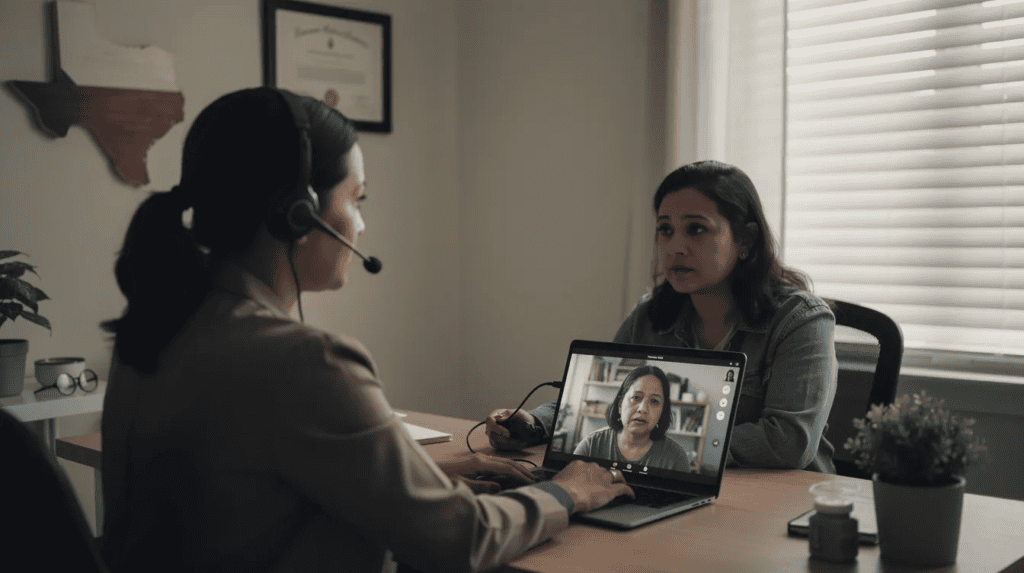
Most VAWA evaluations with Immigration Evaluations of Texas can be completed via secure telehealth, expanding access for survivors across the state.
The telehealth format uses a HIPAA-compliant video platform. You’ll need a private location, stable internet, and a smartphone, tablet, or computer. English and Spanish services are available, and professional interpreters for other languages can be arranged in advance for clients from diverse ethnic backgrounds.
Telehealth means clients in Houston, Dallas, Austin, San Antonio, El Paso, the Rio Grande Valley, and rural Texas areas receive the same level of forensic evaluation – from a licensed therapist or licensed psychologist – without the burden of travel.
Safety matters. If you’re still in an abusive situation, schedule sessions when you’re alone and safe, use headphones, and coordinate with your attorney about safety planning. Confidentiality is maintained in the VAWA evaluation process, but physical privacy during sessions is your responsibility to arrange.
Texas licensing laws require the client to be physically located in Texas at the time of the evaluation sessions. If you’re located outside Texas, seek an evaluator licensed in your state. Licensed clinical psychologists and forensic psychologists providing psychological services must comply with state-specific regulations, including Texas Administrative Code § 465.18 governing forensic services and ethical considerations.
Preparing for Your VAWA Immigration Evaluation
You do not need to remember every date or detail perfectly. The goal is an honest, good-faith account – not a perfect one. Memory gaps are normal after trauma, and a qualified evaluator knows how to work with that.
Practical preparation tips:
- Gather key documents: IDs, any police reports, medical records, prior therapy notes, texts or emails with threats, photos of injuries, and marriage or birth certificates
- Write a brief personal timeline: when the relationship started, major life events, when abuse first began and escalated, and key incidents that stand out
Emotional preparation:
- Normalize feelings of shame, fear, or guilt – they are common among survivors who have experienced abuse
- Use grounding strategies before and after sessions: breathing exercises, a walk outside, or having a supportive friend on standby
- Know that it’s completely acceptable to say «I need a break» or «I’m not ready to talk about that yet» during the interview
If you are currently in danger, prioritize immediate safety. Contact the National Domestic Violence Hotline (1-800-799-7233), a local shelter, or your attorney for safety planning. The evaluation can be scheduled once urgent safety concerns are addressed.
Cost, Timeline, and What’s Included With Immigration Evaluations of Texas
Transparency about fees and timelines helps survivors with VAWA cases around USCIS deadlines and court dates.
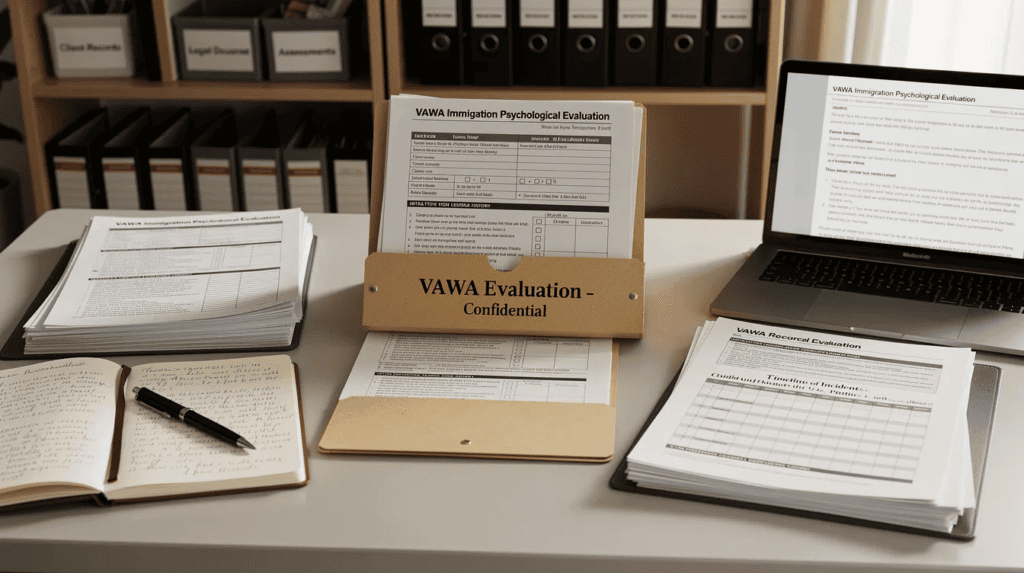
Standard evaluation components include:
- Intake and document review
- One to three clinical interview sessions
- Screening tools and psychometric testing as needed
- Comprehensive 12–20 page forensic report
Pricing may vary based on complexity – for example, if multiple family members need to be interviewed, if extensive records require review, if interpreter services are needed, or if urgent rush turnaround is required. Immigration evaluations for VAWA generally fall within the range typical of forensic evaluations in this field.
Turnaround times: Reports from VAWA evaluations are usually completed within 14 days under standard timelines, and Immigration Evaluations of Texas offers approximately five business-day turnaround after the final interview and receipt of records. Rush options of 24–48 hours are available when clinically feasible. For comparison, reports from evaluations can take 2 to 3 weeks to complete at many other practices, and hardship evaluations can take 2 to 3 weeks for report completion as well. Psychological evaluations improve success rates for hardship waivers following similar processes.
Keep in mind that VAWA processing times average 28.3 months for spousal petitions at USCIS, so early evaluation planning is wise.
Not included: ongoing therapy, legal representation, and extensive court testimony, which require separate arrangements. Expert testimony can be discussed on a case-by-case basis.
Contact us by phone or through our online inquiry form to receive an exact quote tailored to your VAWA evaluation needs.
Conclusion & Call to Action
A VAWA immigration evaluation is a structured, compassionate process designed to tell your story in a way USCIS can understand. It strengthens your chances of immigration relief by providing credible, detailed clinical evidence that connects your abuse history to its psychological impact. You do not need to navigate this alone.
A coordinated team – your immigration attorney and an experienced forensic evaluator – provides both the legal strategy and the psychological documentation your case needs. Immigration Evaluations of Texas brings extensive experience across VAWA cases, hardship waivers, U visa, T visa, asylum, cancellation of removal, and Adam Walsh evaluations. Our services are culturally responsive, bilingual in English and Spanish, accessible via telehealth across Texas, and backed by fast report turnaround with support from licensed clinicians who understand the intersection of immigration and mental health.
Share
Recent Posts

Where to Get an Immigration Evaluation in Dallas, Texas
septiembre 21, 2026
If you need an immigration evaluation in Dallas, you have options that don’t require sitting in traffic across the metroplex. Immigration Evaluations of...

Immigration Psychological Evaluation vs Therapy: What Is the Difference?
septiembre 18, 2026
An immigration psychological evaluation is a formal, time-limited mental health assessment conducted specifically to support an immigration case. It is not ongoing treatment....

What Is Included in an Immigration Psychological Evaluation Report?
septiembre 16, 2026
An immigration psychological evaluation report is one of the most important pieces of evidence you can submit in a U.S. immigration case. Whether...