


junio 19, 2026
Immigration Evaluations of Texas
If you or a loved one is navigating the U.S. immigration system, you may have heard that an immigration psychological evaluation can make or break your case. But what does the evaluation process actually look like, and how do you prepare for it?
Immigration evaluations assess mental health for legal immigration purposes, providing objective clinical evidence for cases ranging from hardship waivers and asylum to U-Visa, VAWA, T-Visa, cancellation of removal, SIJS, Adam Walsh, and removal of conditions petitions. Research suggests that asylum applications with forensic reports have an 81.6% approval rate, underscoring just how influential these reports can be.
At Immigration Evaluations of Texas, we provide bilingual (English/Spanish), telehealth, and in-person immigration psychological evaluations with a standard 5-day turnaround and 24–48 hour rush options. This article walks you through every step of the immigration evaluation process, from the first phone call to the final forensic psychological report.

Understanding Immigration Psychological Evaluations
An immigration psychological evaluation is a forensic assessment conducted by a licensed mental health professional to document mental health symptoms, trauma, and functional impairment relevant to a specific immigration case. It is not therapy or counseling. Here is what sets it apart:
- These are forensic psychological evaluations, meaning they are objective, evidence-based, and designed to inform immigration judges, and USCIS. adjudicatorsEvaluations are conducted by licensed psychologists or psychiatrists (and in many contexts, by a licensed clinical social worker or licensed clinical psychologist, depending on the case type and jurisdiction).
- Reports document trauma and its psychological impact on immigration cases, using clinical findings rather than personal advocacy.
- Psychological evaluations document trauma’s impact on mental health, but they do not guarantee any immigration outcome. They provide powerful clinical evidence that can shape how a case is perceived.
- The fields involved include clinical psychology, immigration psychology, trauma-informed care, and cultural competence.
What Types of Immigration Cases Need an Evaluation?
The specific immigration case type determines the focus of the evaluation and the forensic psychological report. Below are the most common immigration cases that benefit from psychological evaluation:
- Hardship waivers (I-601, I-601A, I-212): Extreme hardship waivers demonstrate the psychological impact on U.S. relatives-typically a U.S. citizen or legal permanent resident spouse or parent-if the applicant is removed or denied entry.
- VAWA (Violence Against Women Act): VAWA petitions allow abuse victims to obtain a green card by documenting domestic violence, coercive control, PTSD, depression, and other trauma-related symptoms. Trauma-related evaluations are crucial for VAWA and asylum cases.
- U-Visa: U Visa supports undocumented immigrants who are crime victims, documenting the psychological impact of the crime on the applicant’s emotional well being and functioning.
- T-Visa: T Visa aids victims of human trafficking in living and working in the U.S. Evaluations focus on mental health conditions resulting from human trafficking.
- Asylum and withholding of removal: Asylum seekers often face psychological evaluations to prove persecution based on political opinion, religion, gender, sexuality, or other protected grounds. Psychological evaluations can support asylum applications by documenting trauma, fear, and PTSD.
- Cancellation of Removal: Cancellation of Removal waivers support deportation cancellation requests by documenting exceptional and extremely unusual hardship to qualifying family members who are U.S. citizens or LPR family members.
- SIJS, Removal of Conditions, N-648, Adam Walsh: Special Immigrant Juvenile Status evaluations address childhood trauma and abandonment. N-648 disability waivers require completion by specific clinicians (MDs or licensed clinical psychologists only). Adam Walsh evaluations address psychological effects related to criminal history and immigration relief.
Step-by-Step Immigration Evaluation Process
The evaluation process follows a structured sequence. Here is what each step looks like in practice:
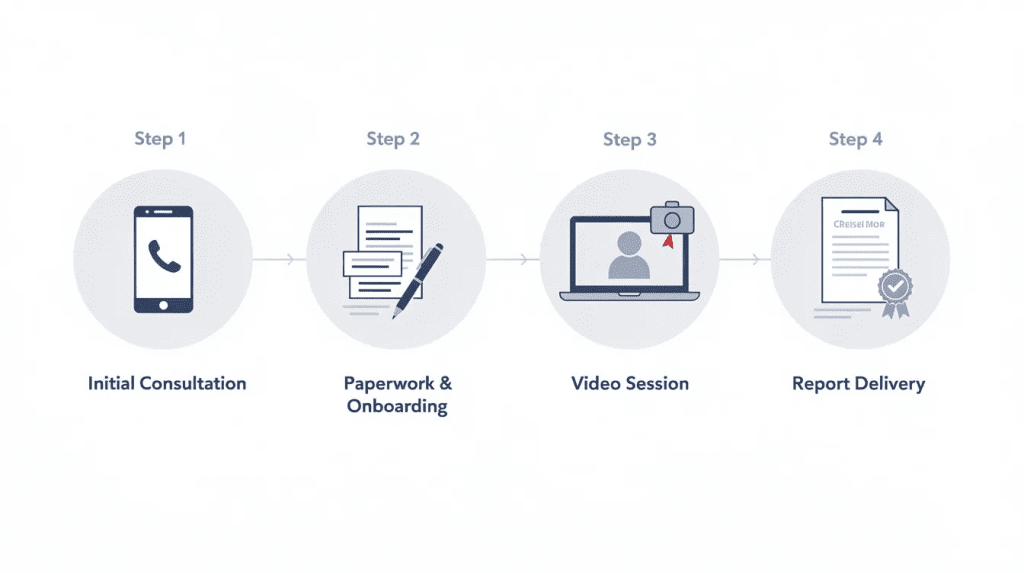
- Step 1 – Case screening: The process begins with coordinating with the client to clarify the type of immigration case (hardship waiver, VAWA, asylum, etc.) and the legal questions the report must address. The evaluation process begins with an initial consultation.
- Step 2 – Scheduling & consultation: Clients contact Immigration Evaluations of Texas by phone or online booking to discuss fees, language needs (English/Spanish), telehealth vs. in-person options, and rush report availability. This initial consultation sets expectations for the entire immigration process.
- Step 3 – Intake paperwork & document collection: Clients complete forms covering demographics, immigration history, and medical/mental health history. Supporting documents often requested include court notices, prior evaluations, medical records, police reports, country condition reports, and letters from family. The evaluator reviews relevant medical and legal records to build a complete picture.
- Step 4 – Evaluation session(s): The evaluation session is conducted via secure telehealth video or in-person, typically lasting 2–4 hours total across one or two appointments. Evaluations typically include a detailed clinical interview, trauma questionnaires, and standardized psychological tests. Psychological testing may be used to measure symptoms such as depression, anxiety, and PTSD.
- Step 5 – Collateral information: With permission, the evaluator may speak briefly with a spouse, parent, or other collateral source. Statements from family members or community leaders are reviewed to support or clarify the client’s personal history.
- Step 6 – Clinical formulation & diagnosis: The evaluator synthesizes mental health history, mental health symptoms, and test results to determine DSM-5 diagnoses (when present) such as PTSD, Major Depressive Disorder, or Generalized Anxiety Disorder. This clinical assessment also evaluates functional impairment and prognosis.
- Step 7 – Forensic report writing: A detailed report is written after the evaluation process. At Immigration Evaluations of Texas, clinicians prepare a 12–20 page, ready formal written report that ties relevant psychological findings and clinical findings to specific legal standards like extreme hardship or credible fear, typically within about 5 business days.
- Step 8 – Quality review & clarifications: Internal review ensures clarity and accuracy.
- Step 9 – Report delivery & use in immigration court: The final signed detailed written report is sent securely. It may be submitted to USCIS, EOIR/immigration court, or the National Visa Center as part of the immigration petition.
- Step 10 – Follow-up & possible testimony: In complex immigration proceedings, the psychologist may provide expert testimony or a supplemental declaration for immigration judges if requested.
What to Expect During Your Evaluation Session
The evaluation session can feel unfamiliar, but understanding what happens helps ease anxiety:
- The session is conversational but structured, covering childhood, migration history, relationships, work, physical health, mental health conditions, and cultural context. Participants should gather documentation and prepare for sensitive topics during evaluations.
- Common topics include past traumas (violence, persecution, abuse), fear of returning to the home country, impact of separation or deportation on children and spouse, and coping strategies.
- Clients can take breaks, bring water, and may have an interpreter if needed. The atmosphere is trauma-informed, culturally sensitive, and nonjudgmental.
- Everything discussed is confidential within legal and ethical limits. Information supports the immigration case-it does not harm it.
- Standardized questionnaires are explained in plain language. There are no «right» or «wrong» answers. Honesty is what matters most.
- Emotional reactions like crying, anxiety, or feeling overwhelmed are normal. The evaluator will pace the session accordingly.

How Immigration Evaluations Strengthen Your Case
A well-prepared immigration psychological evaluation does more than list diagnoses. It tells the story of how trauma, hardship, or abuse has shaped psychological functioning in a way that legal audiences and immigration judges can understand.
- Evaluations clarify complex stories, explain trauma-related memory gaps, and document the severity of mental health symptoms-providing valuable insights that raw testimony alone cannot convey.
- For hardship waivers or cancellation of removal, reports describe risks of relapse, loss of mental health treatment, educational disruption for U.S. citizen children, and the psychological impact of family separation. Family separation is assessed for its emotional and psychological impact on applicants. Trauma exposure and emotional dependency within families are significant in immigration evaluations.
- For VAWA, U-Visa, and T-Visa cases, the report documents patterns of coercive control, domestic violence, trafficking, or other crimes and their psychological consequences.
- For asylum cases, evaluations assess trauma-related symptoms, documenting persecution, torture, nightmares, hypervigilance, and other PTSD symptoms. Psychological evaluations help document PTSD in asylum applications, and asylum grant rates reach 81.6% with trauma-informed evaluations.
- Evaluators assess trauma exposure and psychological harm likelihood, and trauma evaluations can significantly influence immigration outcomes.
- Culturally competent evaluations can double asylum approval odds. Objectivity is key-the evaluator’s role is to present the psychological truth, adding credibility for legal outcome decisions.
Choosing the Right Clinician for an Immigration Evaluation
Not every mental health professional is equipped to write forensic evaluations for immigration purposes. Here is what to look for:
- Work with a licensed mental health professional experienced in immigration psychology, forensic report writing, and clinically relevant assessment conducted for legal audiences. This includes clinical psychologists, licensed psychologists, a licensed clinical psychologist, or a licensed social worker where accepted.
- Ask about the clinician’s experience with specific immigration assessments (hardship waivers, political asylum, VAWA, U-Visa, T-Visa, SIJS, Adam Walsh, etc.).
- Cultural competence is essential for accurate immigration evaluations. Evaluators must understand cultural contexts to avoid misrepresentation, and cultural humility is a core standard for immigration evaluators. Look for bilingual or multilingual skills, especially if the client and evaluator share the same language.
- Language concordance enhances rapport and accuracy in evaluations, especially when working with clients from diverse ethnic and cultural backgrounds.
- Immigration Evaluations of Texas focuses specifically on immigration mental health evaluations, offers telehealth across Texas, and provides rush report options for urgent immigration court deadlines.
- Confirm fees, payment plans, and approximate turnaround times before scheduling.
Preparing for Your Immigration Psychological Evaluation
- Gather copies of supporting documents: USCIS forms (I-601, I-601A, I-918, I-914, I-360, I-589, EOIR notices), court dates, letters from teachers or employers, medical/therapy records, police reports, or restraining orders.
- Write a short timeline of key life events-birth country, major traumas, important dates like entry to the U.S., arrests, relationship milestones, major losses-to help the clinical interview flow smoothly.
- For telehealth, find a quiet, private space with reliable internet, headphones, and have an ID ready for verification.
- Practice basic self-care: get adequate sleep and food if possible, arrange childcare, and plan time to decompress after the evaluation session.
Common Questions About the Immigration Evaluation Process
- How long does the process take? The total process for immigration evaluations typically takes 3 to 6 weeks from first contact to final report. Immigration Evaluations of Texas offers a 5-day standard turnaround with 24–48 hour rush options when clinically appropriate.
- How much does it cost? Traditional evaluations cost between $1,200 and $2,000 and are often not covered by insurance. This typically includes interviews, psychological testing if needed, collateral calls, a 12–20 page forensic report, and brief coordination with clients.
- Is this therapy? No. A psychological evaluation is a forensic assessment, not ongoing treatment. The same clinician usually should not provide both therapy and the evaluation for the same immigration case.
- Is it confidential? Yes. Records are stored on HIPAA-compliant platforms, and reports are transmitted securely.
- Does an evaluation guarantee approval? No. But it can substantially strengthen an immigration case by documenting emotional functioning, trauma, and hardship in a credible, clinically supported way.
- Can it be done online? Yes. Telehealth immigration evaluations are fully accepted and available across Texas and other states where the clinician is licensed.
Sample Timeline: From First Call to Immigration Court
Here is a realistic scenario for a hardship waiver or asylum evaluation:
| Step | Date | Activity |
| 1 | March 1 | Call froml received |
| 2 | March 3 | Client consultation and scheduling |
| 3 | March 5 | Intake paperwork and documents submitted |
| 4 | March 7–9 | Evaluation sessions (2 appointments) |
| 5 | March 14 | Report delivered |
Rush options at Immigration Evaluations of Texas can compress this timeline significantly for urgent immigration court or USCIS deadlines. Factors affecting the timeline include case complexity and clinician availability. Common delays happen when paperwork is incomplete or collateral documents arrive.
About Immigration Evaluations of Texas
Immigration Evaluations of Texas is a practice specializing in immigration psychological evaluations and forensic psychological reports for U.S. immigration cases. Core services include evaluations for hardship waivers (I-601/I-601A), U-Visa, VAWA, T-Visa, asylum, SIJS, cancellation of removal, removal of conditions, Adam Walsh cases, and other immigration waivers.
Key differentiators include 12–20 page comprehensive reports, trauma-informed and culturally attuned care for clients from diverse ethnic backgrounds, bilingual services (English/Spanish), telehealth availability, and fast turnaround options. The practice collaborates closely with each client to ensure reports address the relevant psychological and legal standards while maintaining clinical independence and objectivity.
Share
Recent Posts

Where to Get an Immigration Evaluation in Dallas, Texas
septiembre 21, 2026
If you need an immigration evaluation in Dallas, you have options that don’t require sitting in traffic across the metroplex. Immigration Evaluations of...

Immigration Psychological Evaluation vs Therapy: What Is the Difference?
septiembre 18, 2026
An immigration psychological evaluation is a formal, time-limited mental health assessment conducted specifically to support an immigration case. It is not ongoing treatment....

What Is Included in an Immigration Psychological Evaluation Report?
septiembre 16, 2026
An immigration psychological evaluation report is one of the most important pieces of evidence you can submit in a U.S. immigration case. Whether...