


septiembre 30, 2026
Immigration Evaluations of Texas
If you or someone you love is going through the immigration process, you’ve probably heard that a psychological evaluation could help your case. But do you actually need one? The answer depends on the type of relief you’re seeking, the emotional and mental health factors involved, and what your immigration attorney recommends. This guide breaks down when an immigration psychological evaluation matters most, what happens during one, how much it costs, and how Immigration Evaluations of Texas supports clients every step of the way.

Do I Really Need an Immigration Psychological Evaluation? (Quick Answer)
Not every immigration case requires one. But if your case hinges on proving emotional suffering, trauma, or hardship that goes beyond what ordinary documents can show, an evaluation can be the difference between approval and denial.
Immigration evaluations assess mental health for immigration cases, providing objective evidence of hardship that personal declarations alone cannot deliver. Since around 2010, USCIS has increasingly expected clinical documentation rather than just heartfelt letters.
You likely need an immigration psychological evaluation if:
- Your attorney is preparing an I-601 or I-601A extreme hardship waiver and needs documentation of your spouse’s depression, anxiety, or panic disorder.
- You’re filing a VAWA self-petition, U visa, or T visa and need to document trauma from domestic violence, crime, or trafficking.
- Your asylum case requires proof of psychological impacts of past persecution or trauma.
- A U.S. citizen or lawful permanent resident family member has mental health conditions that would worsen significantly if you’re deported.
- Your attorney says emotional impact is central to your story but hard to prove with regular documents.
- You need an N-648 waiver because a cognitive or mental health condition prevents you from completing the naturalization test.
Evaluations may be requested for waivers, asylum, VAWA, U visas, and deportation defenses. If you’re still unsure, an initial consultation with Immigration Evaluations of Texas can clarify in about 15–20 minutes whether an evaluation fits your situation – before you spend anything on the full assessment.
What Is an Immigration Psychological Evaluation?
An immigration psychological evaluation is a formal clinical assessment conducted by a licensed mental health professional – such as a psychologist or licensed therapist – specifically designed for immigration cases. It’s sometimes called a forensic immigration psychological evaluation or hardship evaluation.
Unlike a general mental health evaluation you might get from your family doctor or medical doctor, this one serves a legal purpose:
- It generates a written report, typically 12–20 pages, for submission to USCIS or immigration court.
- A comprehensive evaluation report details findings and clinical diagnoses such as PTSD, major depressive disorder, or generalized anxiety disorder.
- Clinical interviews assess personal history, trauma, and mental health symptoms, connecting those findings to the specific legal standards in your case.
- Standardized psychological tests measure conditions like depression and PTSD through validated screening tools.
Evaluations typically involve 1–3 sessions with a licensed clinician. Reports document trauma and emotional impacts for legal arguments – not for therapy purposes.
What it is NOT:
- It is not ongoing mental health treatment. It’s a comprehensive and supportive assessment, not weekly counseling.
- It is not fully confidential. The final report is designed to be shared with your attorney, USCIS, or an immigration judge.
During the evaluation, licensed mental health therapists typically review your personal and family history (including your immigration journey), trauma history and medical issues, and any prior mental health care or medications.
When Is an Immigration Evaluation Recommended in Immigration Cases?
Immigration mental health evaluations are most useful in cases where hardship, trauma, or emotional impact sit at the center of your legal argument. Since roughly 2015, immigration courts and USCIS have placed growing weight on objective clinical evidence rather than narrative statements alone.
Here are the most common types of immigration evaluations by case type:
- Extreme hardship waivers (I-601 / I-601A): Extreme hardship waivers document emotional impacts of family separation on qualifying family members. USCIS explicitly lists mental health documentation as acceptable evidence.
- VAWA self-petitions: VAWA petitions help domestic abuse survivors secure green cards. Evaluations document psychological consequences of domestic abuse, including fear, PTSD, and depression under the Violence Against Women Act.
- U visa (victims of serious crimes): A U visa supports victims of serious crimes seeking residency. U visas assess psychological trauma from crime, including assault, robbery, and sexual abuse.
- T visa (human trafficking): A T visa assists human trafficking victims in obtaining legal status. T visas assess psychological trauma from trafficking, coercion, and exploitation.
- Asylum cases: Asylum cases require proof of persecution in home countries. Asylum seekers use evaluations to document persecution experiences and explain memory gaps caused by trauma.
- Cancellation of removal: Cancellation of removal supports deportation defense with psychological evidence, showing how U.S. citizen children, spouses, or parents would suffer exceptional hardship.
- N-648 medical waivers: For naturalization waivers when severe cognitive or mental health conditions prevent completing English or civics requirements.
- Other cases: SIJS, removal of conditions, Adam Walsh-related evaluations, and step-parent petitions where parental fitness or child welfare requires objective assessment.
Many attorneys now consider psychological evaluations standard in hardship and trauma-based immigration cases. Ask your immigration attorney directly: «Would an immigration psychological evaluation strengthen my case?»
How an Evaluation Strengthens Extreme Hardship Waivers and Other Relief
An extreme hardship waiver requires showing that a qualifying U.S. citizen or legal permanent resident relative would suffer beyond the normal sadness any family experiences during separation. USCIS policy evaluates hardship cumulatively across medical, psychological, financial, and other domains.
Psychological evaluations support immigration cases by documenting trauma and connecting it to these legal standards. Specifically, evaluations help prove extreme hardship for immigration petitions by:
- Documenting depression, anxiety, panic attacks, or suicidal thoughts in spouses, parents, or citizen children
- Showing how caregiving responsibilities would collapse if the immigrant is removed
- Explaining why relocation abroad would destabilize relatives with existing mental health conditions
For trauma-based immigration relief:
- U-visa applicants use evaluations to show emotional impact of crimes they survived
- VAWA petitions benefit from evaluations documenting domestic abuse effects, including why victims may have delayed reporting or returned to abusive partners
- Asylum seekers use evaluations to document persecution experiences and explain inconsistencies that judges often question
- Psychological evaluations can support applications for asylum and waivers by humanizing the narrative
No evaluation guarantees approval. But attorneys routinely report that strong, well-written immigration psychological evaluations significantly support the persuasiveness and credibility of petitions.
Step-by-Step: What to Expect From the Immigration Evaluation Process
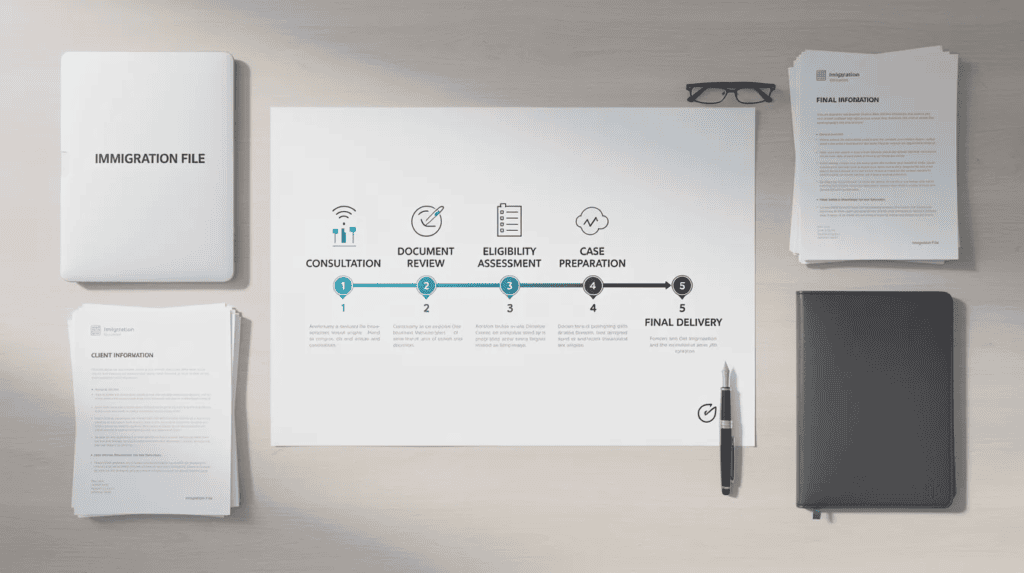
Here’s how the assessment is generally completed from start to finish:
- Attorney referral and case review: Your immigration attorney reviews your case, determines psychological factors affecting the outcome, and sends a referral explaining which form and legal questions the evaluation should address.
- Initial consultation and scheduling: You contact Immigration Evaluations of Texas by phone or online to schedule. You’ll receive intake forms, consent documents explaining limited confidentiality, and a questionnaire in English or Spanish.
- Clinical interviews: Expect interviews to last between 1.5 and 3 hours per session, conducted via secure telehealth or in-office video. The licensed mental health professional explores your mental health history, current symptoms, family roles, and immigration story. The assessment is conducted in a trauma-informed, culturally sensitive manner.
- Psychological testing and screeners: Standardized questionnaires screen for depression, anxiety, PTSD, and stress, assessing mental health symptoms with validated tools. For N-648 cases, cognitive screening may assess memory and attention.
- Record review and collateral input: The evaluator reviews relevant medical records, prior therapy notes, police reports, and required documents. With permission, they may contact a spouse, adult child, or other family member to verify details.
- Report writing: The evaluator prepares a detailed report (12–20 pages) within an agreed timeframe. Immigration Evaluations of Texas offers a standard 5-business-day turnaround, with 24- or 48-hour rush options for urgent deadlines.
- Attorney review and revisions: Your attorney reviews the draft for legal accuracy. After any clarifications, the final report is signed, dated, and ready for submission.
- Optional testimony: In rare immigration proceedings, the evaluator may provide a sworn declaration or court testimony.
Costs, Insurance, and Payment Options for Immigration Evaluations
Immigration psychological evaluations are forensic in nature, which means insurance typically does not cover immigration evaluations. Here’s what to expect financially:
| Factor | Typical Range |
| Standard evaluations | $1,200 – $2,000 |
| Complex cases (multi-family, court) | Can exceed $3,000 |
| Rush services (24–48 hour) | Add $250 – $500 (additional fee) |
| Interpreter services | $50 – $150 per hour |
What affects the total fee:
- Case complexity and number of people interviewed
- Length of the detailed report
- Evaluator experience affects the cost of immigration evaluations – clinicians with extensive forensic backgrounds often charge more
- Turnaround speed
Medical insurance almost never covers these assessments because they serve legal purposes, not standard treatment. Clients should expect to pay privately. Many providers, including Immigration Evaluations of Texas, offer payment plans such as a deposit at scheduling with the remaining balance before report delivery.
While the cost is an investment, a well-prepared evaluation may significantly support hardship waivers, asylum claims, and other applications that determine your family’s future immigration status.
Key Hardship Factors and Emotional Impact We Document
USCIS examines hardship across multiple domains. An immigration psychological evaluation connects real-life suffering to legal standards by documenting:
Mental health symptoms: depression, anxiety, panic attacks, PTSD symptoms, insomnia, appetite changes, concentration problems, and suicidal thinking.
Functional impact on daily life: difficulty working, parenting, studying, or performing basic self-care because of emotional distress.
Common hardship domains we assess:
- Family separation: Impact on young children losing a parent, attachment disruption, regression, and school problems
- Medical and disability issues: How removal of a caregiver would affect someone with chronic conditions – and how extreme hardship waivers prove that family members would suffer severe hardship from deportation
- Safety concerns abroad: Risk of persecution, violence, or lack of mental health care in the country of return
- Educational disruption: How citizen children with special education needs would lose critical support
- Financial stress combined with mental health: When economic hardship worsens anxiety or depression to the point of serious impairment

For example, in a recent hardship waiver case, a U.S. citizen spouse’s diagnosed panic disorder and major depression were documented in detail – showing how separation would remove her primary emotional support system and destabilize her mental health status further.
Immigration Psychological Evaluation vs. Therapy
These two immigration services serve fundamentally different roles:
| Evaluation | Therapy | |
| Duration | 1–3 sessions | Ongoing (weeks/months) |
| Purpose | Legal documentation | Healing and coping |
| Audience | Attorneys, USCIS, judges | You and your therapist |
| Confidentiality | Shared with legal system | Private medical record |
| Insurance | Usually not covered | Often covered |
For ethical reasons, the same clinician usually should not serve as both your treating therapist and your forensic evaluator. The right licensed therapist for ongoing mental health treatment is someone focused on your healing – separate from the evaluator writing your immigration report.
Many clients benefit from having both: a therapist for emotional support and a forensic evaluator for the immigration application. Immigration Evaluations of Texas can coordinate with your therapist (with consent) to incorporate your treatment history into the evaluation.
How to Prepare for Your Immigration Psychological Evaluation
Good preparation leads to a stronger, more accurate report. Here’s what to do before your appointment:
- Gather relevant documentation before your immigration evaluation: medical records, prior mental health records, school reports (for children), police reports, and court notices with upcoming deadlines.
- Prepare a personal timeline of significant life events: arrival in the U.S., key immigration dates, incidents of abuse, hospitalizations, and major losses.
- Complete symptom tracking for one to two weeks prior: note sleep patterns, panic attacks, nightmares, appetite, energy, and mood changes.
- Bring collateral support contacts for verification of experiences – family members, teachers, medical providers, or faith leaders who know your situation.
- Confirm language preference ahead of time. Choose a therapist who speaks your language for better understanding, whether English or Spanish.
- Write down questions you want to ask the evaluator so you feel more in control during the session.
It’s completely normal to feel nervous or emotional. Honesty and detail matter – omitting information can unintentionally weaken the evaluation. For more guidance, read our article on top mistakes to avoid during an immigration psychological evaluation.
When choosing your evaluator, select a therapist familiar with trauma and domestic violence, look for licensed clinicians knowledgeable about immigration processes, and ensure the therapist has experience with diverse cultural backgrounds and diverse ethnic communities.
Why Work With Immigration Evaluations of Texas?
At Immigration Evaluations of Texas, we focus exclusively on immigration psychological evaluations. Choose a therapist experienced in immigration evaluations – that’s exactly who we are.
- Specialized expertise: Experience across hardship waivers, U-visa, VAWA, T-visa, asylum cases, SIJS, cancellation of removal, removal of conditions, Adam Walsh evaluations, and more.
- Licensed professionals: Every evaluation is completed by a licensed mental health professional familiar with USCIS and immigration court expectations, with deep understanding of psychological factors that affect immigration outcomes.
- Telehealth convenience: Secure video-based assessments for clients across Texas – Houston, Dallas, San Antonio, Austin – and beyond.
- Fast turnaround: Standard 5-business-day delivery, with 24- or 48-hour rush options for urgent deadlines.
- Comprehensive reports: 12–20 page forensic reports written in clear language that attorneys and adjudicators understand.
- Culturally sensitive care: Trauma-informed approach for clients from Latin America, Africa, Asia, and other regions. Bilingual English/Spanish services available.
- Attorney collaboration: We regularly coordinate with immigration attorneys for attorney review to ensure clinical findings align with legal strategy and provide legal guidance support.
Ready to find out if an evaluation is right for your case? Schedule a consultation by phone or through our online booking. Telehealth appointments and bilingual services are available.
Share
Recent Posts

How Psychological Evaluations Help SIJS Cases
noviembre 4, 2026
Imagine a teenager in Texas who fled abuse in their home country, now living with a foster family, attending a new school in...

What Is an Adam Walsh Waiver Evaluation?
noviembre 2, 2026
When a U.S. citizen or lawful permanent resident with a past conviction involving a specified offense against a minor tries to sponsor a...

Can Children Receive Immigration Psychological Evaluations?
octubre 30, 2026
Yes-children can absolutely receive immigration psychological evaluations, and in many cases, these assessments are among the most influential pieces of evidence in a...