


July 29, 2026
Immigration Evaluations of Texas
If you or someone you know has experienced domestic violence at the hands of a qualifying family member, VAWA psychological evaluations can be one of the most powerful pieces of evidence in an immigration case. The Violence Against Women Act provides a pathway for survivors to self-petition for lawful permanent resident status, and despite its name, VAWA protections apply regardless of gender.
USCIS and immigration courts routinely give significant weight to professional immigration psychological evaluations that document the emotional and psychological effects of abuse. These evaluations translate lived trauma into clinical findings that adjudicators understand. Confidentiality protections exist under federal law for VAWA-related immigration filings, so survivors can come forward without the abuser being notified.
At Immigration Evaluations of Texas, we specialize in conducting immigration evaluations for VAWA, hardship waivers, U-Visa, T-Visa, asylum, and other forms of immigration relief. Our licensed psychologists serve clients physically located anywhere in Texas through secure telehealth, with a standard 5-business-day turnaround and 24–48 hour rush options for urgent deadlines.
If your immigration attorney has recommended a psychological evaluation, we encourage you to schedule a consultation so we can discuss your timeline and needs.
What Is a VAWA Psychological Evaluation?
A VAWA psychological evaluation is a forensic assessment conducted by a licensed mental health professional to support a VAWA self-petition. It is not therapy. Its purpose is to document the psychological and emotional impact of battery or extreme cruelty inflicted by a U.S. citizen or lawful permanent resident spouse, parent, or child, and to present those findings in a format that meets USCIS evidentiary standards.
VAWA applicants must submit Form I-360 for self-petitioning. VAWA evaluations document psychological impact for USCIS Form I-360 applications by providing a structured, court-ready report that connects a survivor’s experiences to recognized diagnostic criteria.
It is important to understand the difference between forensic evaluations and clinical treatment. Clinical evaluations focus on diagnosis and treatment planning within a therapeutic relationship. Forensic evaluations, by contrast, meet legal evidentiary standards and are specifically designed for legal proceedings. Clinical evaluations may not withstand legal scrutiny or cross-examination, which is why a purpose-built forensic report matters.
VAWA evaluations are conducted by licensed mental health professionals with training in immigration psychology and forensic assessment. A typical report runs 12–20 pages and includes developmental history, abuse history, symptom documentation, diagnostic impressions using DSM-5-TR criteria, a clinical opinion on credibility and mental health impact, and treatment recommendations. Immigration attorneys use these reports to build the evidentiary record for their clients’ immigration cases.
These evaluations are confidential and trauma-informed, structured to minimize re-traumatization while still gathering the detail USCIS requires.
VAWA Eligibility and When an Evaluation Helps
The evaluator does not decide legal eligibility for VAWA. That role belongs to your immigration attorney. However, understanding the basics helps you prepare for the evaluation process.
In plain language, eligibility requires:
- A qualifying relationship (spouse, parent, or child) to a citizen or lawful permanent resident
- Evidence of abuse or extreme cruelty by that qualifying relative
- Applicants must demonstrate cohabitation with the abuser
- Good moral character
- Official documents like marriage certificates are required for relationship proof
VAWA applies to abuse experienced by both men and women, including same-sex relationships. Eligibility includes abuse by a U.S. citizen or LPR family member.
A VAWA evaluation becomes especially important when survivors face common evidentiary gaps: no police reports, no medical records, limited physical evidence, language barriers, or deep fear of calling law enforcement. In these situations, a detailed psychological evaluation can serve as the primary documentation of harm.
Evaluations can also support related immigration relief down the road, including adjustment of status or certain extreme hardship waivers, by documenting ongoing mental health outcomes. If you do not yet have a legal representative, we strongly recommend consulting an immigration attorney before scheduling.

How VAWA Psychological Evaluations Support Your Immigration Case
Credible evidence of abuse is essential for VAWA applications, but many survivors lack the physical proof that adjudicators might expect. A well-documented psychological evaluation fills that gap by translating lived experience into objective clinical evidence.
Here is how a strong evaluation strengthens your legal outcome:
- It corroborates the survivor’s personal testimony with an objective assessment conducted by a qualified forensic psychologist, using verification methods like standardized measures and behavioral analysis.
- It connects specific abuse patterns-coercive control, isolation, threats of deportation-to clinically recognized trauma responses such as PTSD, anxiety, or depression.
- It provides objective evidence for survivors seeking immigration relief under VAWA when other documentation is limited or absent.
- Psychological evaluations help document trauma when other evidence is lacking, such as missing police or hospital records.
- Evaluations assess emotional harm from abuse, including anxiety and depression, giving adjudicators a clinical basis for their decisions.
Research supports the value of these evaluations. A study by Physicians for Human Rights examining 2,584 immigration relief cases found that forensic evaluations improve VAWA grant rates to 81.6%, compared to roughly 42.4% for cases without expert documentation. Psychological evaluations are not a requirement in every VAWA case but serve as supporting evidence that can significantly shift outcomes.
Key legal questions the evaluation helps answer for adjudicators include: the credibility of the abuse narrative, severity and duration of psychological harm, the psychological impact on daily functioning, and likely consequences if relief is denied. Clear, objective language and clinical clarity make it easier for immigration attorneys to build arguments and respond to Requests for Evidence.
Common Forms of Abuse Documented in VAWA Evaluations
Many survivors minimize what they have endured or question whether their experiences “count.” Naming the different forms of abuse helps clients and adjudicators alike understand the full scope of harm.
VAWA recognizes physical, emotional, and psychological abuse types. Here are the categories most commonly documented in forensic evaluations:
Physical abuse includes hitting, pushing, choking, restraining, or any use of physical violence. Even when physical injuries have healed, the psychological effects often persist for years.
Sexual assault encompasses any forced or coerced sexual contact, including within a marriage. Survivors frequently carry deep shame that discourages reporting.
Emotional abuse can include manipulation, intimidation, and isolation. Survivors may be systematically cut off from family, friends, and community resources.
Coercive control is a common form of abuse under VAWA. It involves patterns of domination-monitoring movements, controlling finances, restricting communication, or making all household decisions unilaterally. Emotional manipulation and coercive control are significant abuse patterns that erode a person’s autonomy over time.
Extreme cruelty under VAWA includes threats and humiliation, such as public degradation, threats to harm children, or threats to destroy the survivor’s immigration status by withholding documents or threatening deportation.
Immigrant women report lifetime IPV rates as high as 93%, making these patterns disturbingly common. Psychological evaluations document trauma responses like hypervigilance and dissociation. Chronic fear and anxiety are common psychological effects of abuse, alongside depression and hopelessness that are prevalent among abuse survivors.
Evaluators at Immigration Evaluations of Texas are trained to recognize cultural context and gender-specific patterns of abuse, including dynamics unique to immigrant and mixed-status families. Visible injuries are not required; long-term emotional impact often carries substantial weight in immigration psychological evaluations. You control what you share, and the evaluation process moves at a pace that feels emotionally safe while meeting legal requirements.
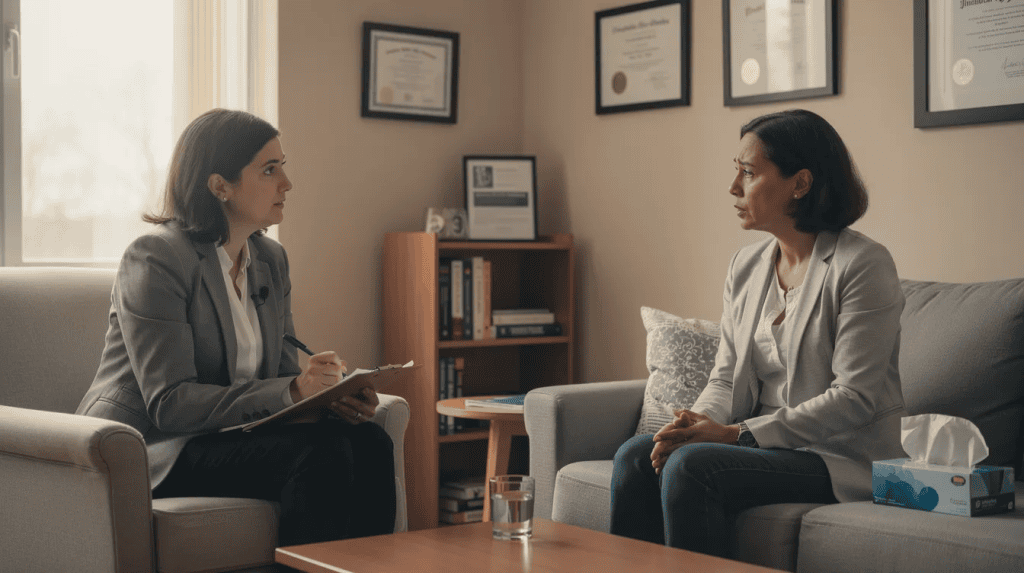
What to Expect: Our VAWA Evaluation Process in Texas
The evaluation process is structured and predictable, which helps reduce anxiety before you begin. Here is what each step looks like:
Step 1 – Initial consultation. A 10–15 minute phone or online consultation confirms the type of evaluation you need, your deadlines, and basic case details.
Step 2 – Intake and consent. You complete intake forms and consent documents that explain the purpose, scope, and limits of confidentiality. You will know exactly who receives the report and how it will be used.
Step 3 – Attorney coordination. With your written consent, we contact your immigration attorney to clarify the legal questions the evaluation should address. This ensures the report is precisely targeted.
Step 4 – Clinical interviews. One or more comprehensive clinical interview sessions are conducted by secure video (or in-person video where appropriate). Clinical interviews in evaluations help survivors share their personal history and narrative of abuse. Sessions typically run 90–120 minutes, sometimes split across two or three shorter meetings for complex trauma or to allow emotional breaks.
Step 5 – Standardized testing. Optional standardized psychological testing may be administered to assess the severity of trauma, including validated instruments for PTSD, depression, and anxiety.
Step 6 – Report drafting. The evaluator drafts the report y for factual clarity-not legal editing.
Step 7 – Delivery. You receive a final court-ready report. Standard turnaround is 5 business days after the final interview, with 24–48 hour rush options when USCIS or court deadlines are urgent.
Payment is structured as a flat evaluation fee with a rush surcharge for expedited timelines. We provide written fee agreements before any work begins. All telehealth evaluations comply with HIPAA and Texas licensing regulations under 22 TAC §465.18 and are available to clients physically located in Texas at the time of service.
Inside the Report: What Immigration Attorneys and USCIS Look For
A strong VAWA report is both clinically sound and legally useful. The evaluator prepares a detailed written report for USCIS outlining the individual’s experiences and clinical findings.
Here is what a typical report includes:
| Report Section | Purpose |
| Referral question and legal context | Frames the evaluation within VAWA and Form I-360 standards |
| Social, medical, and immigration history | Establishes background and timeline |
| Abuse history and patterns | Documents specific incidents, frequency, and severity |
| Mental health symptoms | Describes current emotional functioning and distress |
| Diagnostic impressions (DSM-5-TR) | Provides formal diagnoses (e.g., PTSD, Major Depressive Disorder, GAD) |
| Clinical opinion on credibility and impact | Links abuse to documented psychological distress |
| Prognosis and treatment recommendations | Projects future mental health needs |
Evaluators tie specific experiences to diagnostic criteria using DSM-5-TR language that judges and adjudicators recognize. The CAPS-5 (Clinician-Administered PTSD Scale) is considered the gold standard for PTSD diagnosis, alongside self-report instruments like the PCL-5.
VAWA psychological evaluations can include measures for diagnosing PTSD, anxiety, or depression. Reports detail the psychological effects of abuse, credibility, and findings. Evaluators also consider behavioral observations such as cognitive functioning and ability to report daily functioning, and they assess the impact of abuse on mental health and daily functioning throughout the interview.
Evaluators review documentation such as medical records and police reports to provide context, though the absence of these records does not prevent a thorough forensic assessment. Forensic evaluations anticipate legal scrutiny and potential challenges, so reports are written to withstand cross-examination should testimony be needed in immigration courts.
Immigration Evaluations of Texas prepares reports in English and can integrate Spanish-language source interviews, with professional interpreters as needed. Concrete examples, specific dates, and clear diagnostic language are prioritized over vague generalizations.
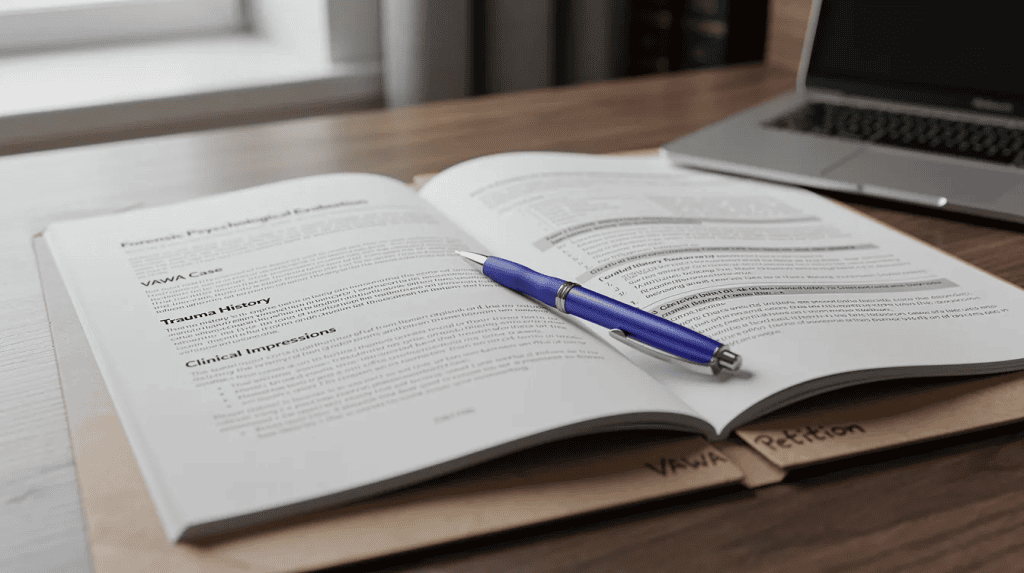
Trauma-Informed, Culturally Responsive Care
Trauma-informed care rests on five principles: safety, choice, collaboration, trustworthiness, and empowerment. These guide every stage of the clinical assessment at Immigration Evaluations of Texas.
In practice, this means pacing interviews carefully, offering breaks when discussing traumatic events, explaining why each question is asked, and avoiding unnecessary detail that could re-traumatize. The evaluation is designed so that the survivor maintains a sense of control throughout.
Cultural humility matters deeply in immigration psychological evaluations. Understanding migration stories, community norms, spiritual beliefs, and stigma around mental health allows the evaluator to ask questions that are culturally and linguistically accessible. Our team frequently works with Spanish-speaking clients and mixed-status families, using professional interpreters when needed and adjusting the clinical interview to honor cultural context.
While the evaluation is not therapy, evaluators provide grounding strategies during interviews and referrals to community mental health resources and ongoing support services when appropriate. Mental health professionals conducting these evaluations understand that disclosing domestic abuse is voluntary, and not remembering everything perfectly is entirely common after prolonged abuse. Fragmented memory can itself be a clinical finding-research on trauma and memory shows that avoidance, dissociation, and fear of law enforcement frequently produce gaps that are clinically explainable rather than evidence of dishonesty.
Your story does not have to be perfect to be true.
Working with Your Immigration Attorney
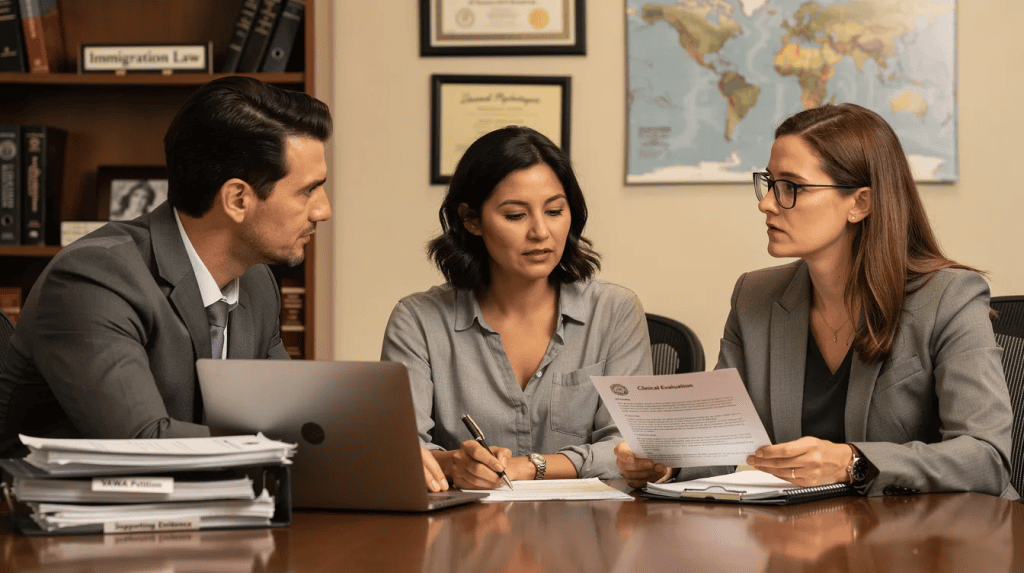
The strongest VAWA cases are usually built by a coordinated team: client, immigration attorney, and forensic evaluator. Each plays a distinct role, and the evaluation is most effective when these roles are clearly defined.
Immigration Evaluations of Texas collaborates with immigration attorneys by clarifying the legal theory of the case, understanding filing timelines, and ensuring the evaluation addresses relevant legal standards. We do not provide legal advice-that is the attorney’s domain. Our role is to deliver a forensic assessment grounded in clinical impressions and objective evidence.
With written consent, evaluators may speak with attorneys before and after the evaluation to answer questions, clarify facts, or respond to RFEs involving mental health issues. If you do not yet have a legal representative, we recommend seeking one before scheduling. Evaluations are most precisely targeted when the legal strategy is already in place.
Attorneys often use the report to prepare clients for USCIS interviews or immigration court testimony, helping them speak about their experiences more confidently. This collaboration supports both accurate mental health documentation and a coherent legal strategy toward immigration relief, whether the case involves a VAWA petition, u visa evaluations, removal evaluations, or other immigration proceedings.
Conclusion & Call to Action
VAWA psychological evaluations provide powerful, trauma-informed evidence that can significantly strengthen a survivor’s immigration case. They document the emotional impact of domestic abuse through clinical clarity and validated diagnostic methods, giving adjudicators the professional documentation they need to understand what a survivor has endured.
The benefits are clear: these evaluations increase credibility, support immigration relief even when physical evidence is absent, and provide a respectful space where survivors are heard-sometimes for the first time.
If you or your immigration attorney are preparing a VAWA petition, we invite you to schedule a consultation with Immigration Evaluations of Texas. Our forensic psychologists serve clients across Texas via secure telehealth, covering VAWA, extreme hardship waivers, u visa evaluations, asylum evaluations, T-Visa, and other immigration psychological evaluations.
If you have an upcoming deadline, mention it when you call so we can explore 24–48 hour rush options. Your safety, your dignity, and your path forward matter-and you do not have to walk it alone.
Share
Recent Posts

How to Choose the Right Immigration Evaluation Provider in Texas
August 3, 2026
If you or a loved one is facing an immigration case in Texas, knowing how to choose the right immigration evaluation provider in...

How T Visa Psychological Evaluations Strengthen Immigration Cases
July 31, 2026
Survivors of human trafficking face some of the most harrowing experiences imaginable, from involuntary servitude and debt bondage to sexual assault and forced...
How VAWA Psychological Evaluations Support Your Immigration Case
July 29, 2026
If you or someone you know has experienced domestic violence at the hands of a qualifying family member, VAWA psychological evaluations can be...